
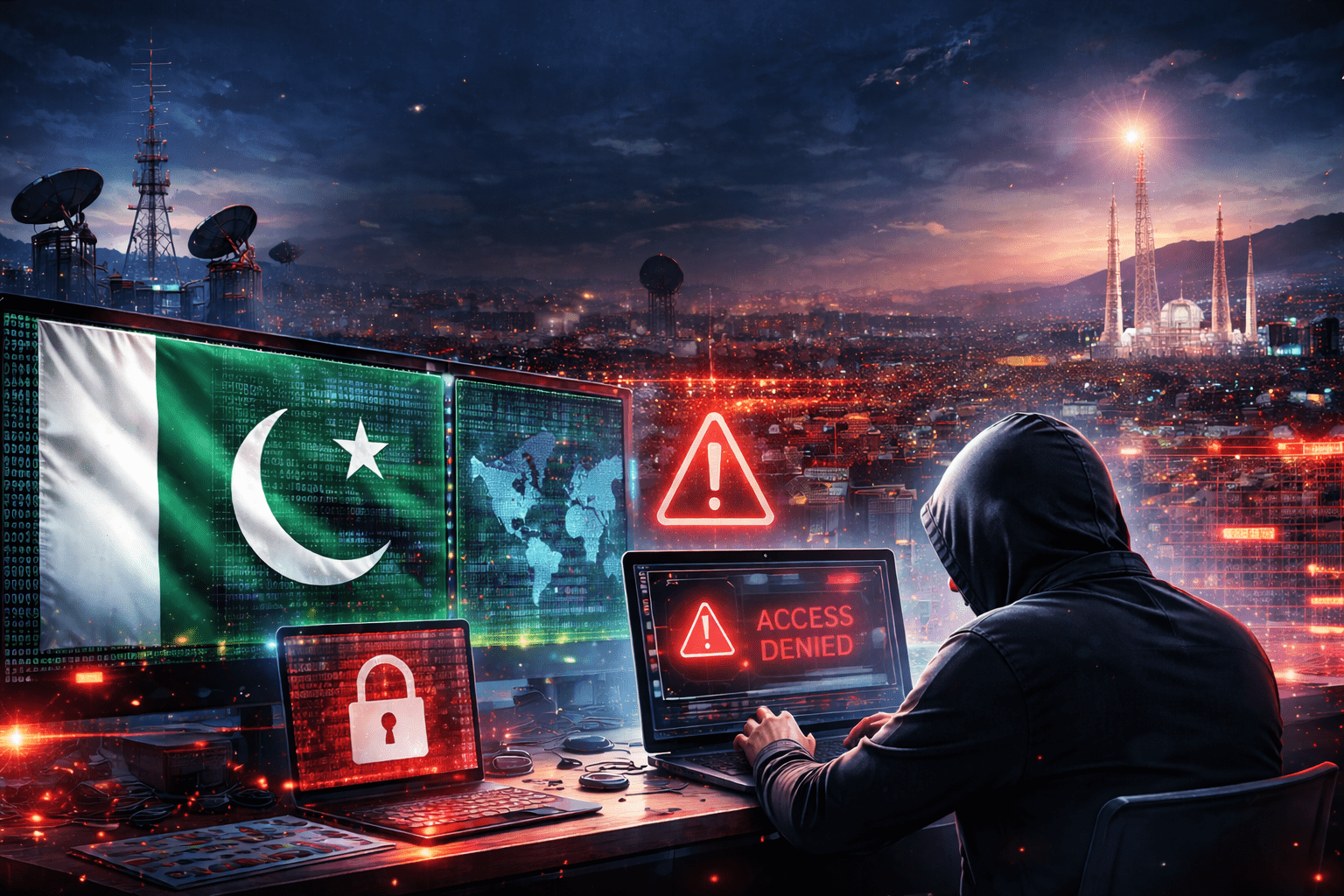
Why This Attack Is Important
Pakistan recently faced a major cyber attack that targeted media networks and digital systems, raising concerns about national security and online safety. In today’s increasingly digital world, cyber threats are becoming more frequent and sophisticated, affecting not only government institutions but also media, financial networks, and private organizations.
This recent incident highlights the need for strong cybersecurity measures and quick response strategies to protect critical infrastructure and public information.
What Happened During the Attack?
In early March 2026, several Pakistani media channels experienced sudden disruptions. During the attack, some channels briefly displayed unauthorized content and warning messages, while broadcast signals were interrupted. This caused panic among viewers and widespread discussions on social media.
Authorities have stated that the attack seemed organized and deliberate, likely focusing on satellite and broadcast transmission systems rather than traditional websites. While no sensitive government data leaks were confirmed, the disruption to media systems demonstrates the growing risks posed by cyber attacks.
How the Government Responded
Pakistan’s National Computer Emergency Response Team (CERT) immediately began investigating the incident. Officials emphasized that protecting media networks, government departments, and other critical systems is a top priority.
Some of the initial steps taken by authorities included:
- Monitoring digital networks for unusual activity
- Issuing cybersecurity alerts to public and private organizations
- Advising media outlets to strengthen firewalls and software security
- Increasing coordination between government cybersecurity teams and critical infrastructure operators
These measures aim to prevent similar attacks in the future and protect public trust in national institutions.
Why This Attack Is Significant
This cyber attack is significant for multiple reasons:
1. Disruption of Media Systems
Media outlets are crucial for public information. Attacks on broadcast systems can create confusion, spread misinformation, or undermine confidence in government communication.
2. Threat to National Security
Cyber attacks are no longer just technical problems—they are national security concerns. Disruptions in digital infrastructure can affect government operations and emergency communication.
3. Evolving Cyber Threats
The attack shows that hackers are using advanced techniques to breach systems. Cybersecurity is becoming an essential part of national defense planning.
4. Vulnerability of Critical Infrastructure
Satellite and broadcast systems, banks, and government networks are now considered critical infrastructure. Protecting these systems requires constant monitoring, updated software, and secure communication protocols.
Cybersecurity Challenges in Pakistan
Pakistan has faced growing cyber threats in recent years. Some common challenges include:
- Ransomware attacks targeting organizations and government offices
- Phishing campaigns aimed at stealing sensitive information
- Malware infections on financial systems and personal devices
- Organized hacker groups using advanced tactics to disrupt national networks
With digital transformation accelerating in government and private sectors, Pakistan’s vulnerability to cyber attacks continues to increase.
Lessons Learned from the Attack
The recent cyber attack provides several important lessons:
Strengthen Digital Infrastructure
All organizations should regularly update software, implement strong firewalls, and secure satellite and network communication systems.
Monitor Systems Continuously
Real-time monitoring and early detection systems help prevent attacks before they cause major disruptions.
Educate Employees
Staff training on cybersecurity awareness is crucial. Employees should know how to identify suspicious emails, avoid unsafe links, and use secure passwords.
Invest in National Cyber Defense
The government must continue investing in cybersecurity research, defense systems, and rapid response teams to handle emergencies effectively.
Raise Public Awareness
The public should be informed about online safety, misinformation, and digital hygiene to reduce the impact of cyber attacks on society.
Role of Cybersecurity in Modern Defense
Cybersecurity has become a core component of national defense. In modern conflicts, digital spaces can be targeted alongside physical borders. Countries worldwide are now prioritizing cybersecurity to protect communication networks, financial systems, and government operations.
The Pakistan attack shows that cyber threats are a global challenge, and proactive measures are essential to maintain security, stability, and public confidence.
Future Implications
Experts warn that cyber attacks are likely to increase in frequency and sophistication. For Pakistan, the following steps are crucial:
- Establishing stricter regulations for cybersecurity in private and public sectors
- Encouraging collaboration between government, IT companies, and academic institutions
- Developing advanced detection tools to identify and respond to attacks quickly
- Strengthening international cooperation to combat cross-border cyber threats
By implementing these measures, Pakistan can reduce the risk of future attacks and ensure safer digital environments for businesses, citizens, and institutions.
Conclusion
The recent cyber attack on Pakistan highlights the growing importance of cybersecurity in today’s digital world. While the full investigation is ongoing, the incident shows how vulnerable digital systems can be and why strong preventive measures are critical.
Pakistan’s government and organizations must continue investing in cybersecurity, public awareness, and system monitoring to prevent similar attacks in the future. Digital security is not just a technical issue—it is a matter of national safety and public trust.